
Bobby-Bill is an 76 year old farmer with a history of sun exposure who presents with a growth on both eyes that he is concerned about. His eyes are often dry and irritated. His eye looks as follows; the other eye is normal.
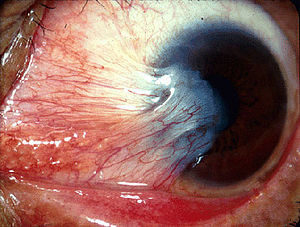
What are the differentials of this presentation?
- Pterygium
- Pinguecula
- Nodular episcleritis
- Conjunctivitis
- SCC
What features of examination would allow you to differentiate pinguecula from pterygium?
- Pinguecula doesn’t cross into the cornea
How do you differentiate pterygium/pinguelecula from nodular episcleritis?
- Less flesh overgrowth in nodular episcleritis
- Mild discomfort in episcleritis
- Episcleritis improves with phenylephrine
- Noduler episcleritis will resolve in 2-3 weeks
- 26% chance of vision loss
What are the features on history of this pterygium?
- Redness
- Irritation
- Itching
- Noticed the growth
- Visual blurring if growing over centre
What are the risk factors for developing pterygium?
- Age
- Dry eyes
- Male
- Living in dry environment
What is the non-pharmacological management of pterygium?
- Avoid sun exposure
- Sunglasses
- Referral to ophthalmologist
What is the pharmacological management of pterygium?
- Artificial tears
- Short course topical corticosteroids by ophthalmologist
What are the complications of pterygium?
- Astigmatism
- Macular degeneration
- Visual acuity loss in affected eye
What are the criteria for referral of pterygium to ophthalmologist?
- Lesion of size – 3mm or greater from limbus to apex
- visual axis is threatened
- dysplasia of pterygium
References
- Digital Reference of Ophthalmology; Edward S. Harkness Eye Institute
- Kolb H; Gross Anatomy of the Eye
- Clinical Ophthalmology: A Systematic Approach
- Fourteenth Annual Handbook of Ocular Disease Management; Review of Optometry
- http://pterygium.info/en/pterygium/treatment/
[wpforms id=”7496″ title=”false” description=”false”]


