
Betty, 70 presents with painless gradual onset distortion of vision over the past 6 months. She notes that straight lines seem wavy and objects seem distorted. She has difficulty in focussing on objects but no change in her peripheral vision. She is having difficulty in driving. On fundoscopy you note the following:
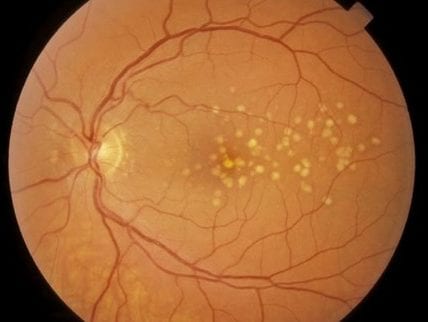
What are the abnormal features that you see on fundoscopy?
- Drusen
What are the causes of drusen?
- Age
- Macular degeneration
- Choroidal malignant melanoma
- Retinal detachment
What are common causes of visual failure in the elderly?
- Macular degeneration
- Cataracts
- Glaucoma
- Diabetic retinopathy
- Trauma
What are the complications of visual failure in the elderly?
- Increased falls risk
- Driving restrictions
- decreased ADLs
- Higher dependence on care
What is your main initial diagnosis?
- Dry Macular Degeneration
What are the strong risk factors for development of this condition?
- Age
- Smoking
- Previous cataract surgery
- Family history
What are the moderate risk factors for development of this condition?
- Higher BMI
- Cardiovascular disease history
- Hypertension
- High plasma fibrinogen
What are the key features of history in this presentation?
- Sudden fading of central vision
- Distortion of vision
- Straight lines seem wavy
- Objects seem distorted
- Periphery normal
What are the key features of examination in this condition?
- Amsler grid test – wavy
- Macular drusen
- Peripheral fields normal
- Central vision lost
- Red reflex normal
- Central scotoma
- Bilateral though one eye leads
What are the key features of management of this condition?
- Refer ophthalmology for management
- Vitamin A
- Vitamin C
- Vitamin E
- Beta carotene
- Zinc
- Manganese
- Copper
- CoQ
- Spectacles
- No smoking
- AMD support group
- Quality sunglasses
What is the role of the GP in providing ongoing management in this condition?
- Smoking cessation
- Vitamin supplementation
- Healthy varied diet
- Awareness of Charles Bonnet syndrome
- Awareness of post-injection Endopthalmitis
- Access to psychological services
- Assessing fitness to drive. N = V/A of at least 6/12 in better eye or both eyes
[wpforms id=”7496″ title=”false” description=”false”]


